Heart Smarts
Heart Smarts
Jan 26, 2026
Can any of you remember how your toes curled under the weight of heavy wool blankets when cold weather hit? Of course, Gram believed in “fresh air,” so she always cracked open the window—even during snowstorms. Inside my bedroom, snow piled up on the windowsill, and when the wind blew, flakes flew.
Snow brings back memories of my childhood in Pennsylvania. Like architects, we designed igloos from piles of snow left by the plows. We trudged up hills to snuggle up with cousins on toboggans, saucers, and sleds. Long underwear, snowsuits, gloves and mittens, scarves, and hats kept us warm and often restricted our ability to bend. So, if we happened to fall, we rolled like human snowballs.
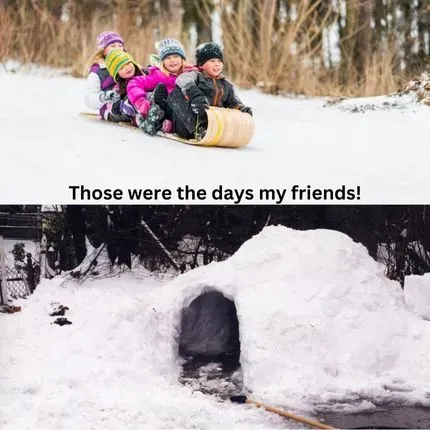
Those memories make our hearts smile. But today, I need to share memories to make you more heart smart.
Nurses who worked in the cardiac ICU shuddered whenever heavy snow fell—not because of chilly temperatures, but because we knew shoveling can be deadly. Men and women bundled up, grabbed shovels and ice melt, and worked hard, determined to clear walkways and drives. Exercise and physical exertion were not usual activities for many of these individuals, and far too many were totally oblivious to the signs and symptoms of a heart under stress.
Allow me to be a bit teacherly this month, in hopes of saving a loved one.
What are the signs of heart stress?
If you answered chest pain, you would be right. However, not everyone presents to the hospital with chest pain. Commercials where a man grabs his left arm and the center of his chest, grimacing in excruciating pain, paint the picture of severe heart pain—but that is not the whole story. Let me explain things as simply as possible.
Our heart is a pump. The pump fills with blood. Our red blood cells are like UPS delivery trucks that carry oxygen and nutrients to feed all the cells, tissues, and organs in our body. But guess what?
Our pump needs a blood supply too. The coronary arteries feed the pump. Here is a major point: our heart pump has a front, back, sides, top, bottom, and multiple muscle layers.
So, what causes heart pain? Lack of blood flow. If you think of coronary arteries like pipes, what happens when a pipe becomes clogged? Pain happens when an area of your heart lacks oxygen and nutrients. Don’t forget—there are multiple areas of the heart.
Symptoms differ depending on which area is screaming for help. The area of the heart without blood flow is starving. Because some symptoms mimic other health issues, people often ignore them. Below is a chart created from the American Heart Association that identifies the artery (for those who love details), the area of the heart, and the symptoms—to help you be heart smart.
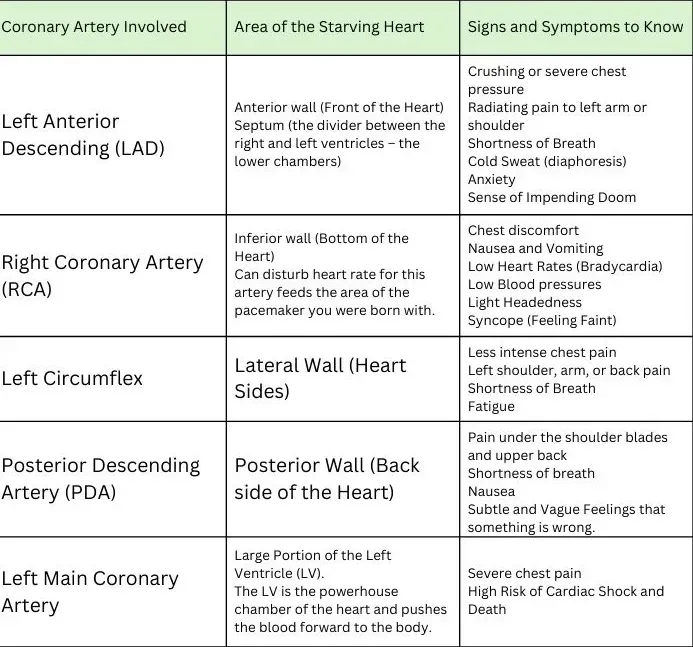
Another term for heart attack is myocardial infarction (MI). Be a wordsmith and realize it simply means the heart (cardial) muscle (myo) suffered tissue death (infarction) due to lack of blood flow. No oxygen equals tissue death. That is why it is vitally important to get to the hospital stat if you experience any of these symptoms. We say time is muscle—now you know what that means. If we can reestablish blood flow to the heart within a 30-to-90-minute timeframe, we save the pump! From the door of the emergency room to the cath lab to open the blocked artery and reestablish blood flow.
Be cognizant of what people say:
- “I feel like an elephant is sitting on my chest.”
- “My chest is in a vice.”
- “Something just turned off my air.”
- “I can’t catch my breath.”
- “I feel like I’m going to pass out.”
- “How can I be sweating when I’m cold?”
- “I’m exhausted.”
- “Worst heartburn of my life.”
- “How strange—my jaw and teeth hurt.”
- “My back is killing me.”
- “Am I going to die?”
Please don’t neglect any of these signs and symptoms. If you eat a heavy meal, shovel snow, and develop severe indigestion, you may need more than Tums.
Another Heart Smart Gem
Women, older adults, and those with diabetes may present with symptoms that are easily dismissed: unexplained shortness of breath, fatigue, jaw or neck pain, and nausea.
What about risk factors?
As you know, I am always cognizant of your time—because I could go on for hours with heart-healthy education. Instead, I will point you to my (slightly crazy) video titled Oh Nasty Plaque.
https://www.youtube.com/watch?v=_glc0pMG0fI
Subscribe to my YouTube channel @drdonnak. And if you want more nursey medical knowledge, you can also watch my educational video, Start With the Heart.
https://www.youtube.com/watch?v=Hxa2iHDoNz4
I hope this helps you—or those you love—stay healthy during this season of severe weather. Please share this newsletter with your friends and feel free to post it on social media. Also, if this newsletter is helpful, I am happy to provide you with more information on any type of health situation you face. Just shoot me a note on the prayer request page and it will dump into my email. Let me know if you need resources and I can send you links to the best sites.
Take care of your heart.
Do it for your family and those you love.
Do it for the Lover of your heart and soul.
There is only one you. You are loved and important to so many.
May the Lord keep you safe, warm, and content.
From my heart to yours,
Blessings always,
Donna